
The Many Lives of Tradition
Traditions are woven into our lives, often without us questioning how they began or why we continue them. Some remain unchanged for generations, while others adapt, evolve, or take on new meanings beyond the communities where they originated.
Growing up in Asawase, a community in Kumasi, the capital of Ghana's Ashanti Region, much of what I learned about tradition came from everyday life.
I remember my mother always cooking more food than our household needed, keeping some ready in case someone stopped by. It could be an extended family member visiting from the village or simply someone passing through who needed a meal. My mother always made room for that possibility.
Today, we might call these gestures acts of kindness or hospitality. But growing up, it was simply how we lived. There was nothing extraordinary about offering someone a meal. It was part of the everyday care we extended to others.
After so many years away from Ghana, I find myself appreciating certain things from my upbringing in ways I didn't quite understand then. I think about my mother's generosity and how naturally she made room for others. I may not do things exactly as she did, but I recognize how much of what I learned from her still influences the way I live today.
And perhaps that is what I find most meaningful about tradition. Even when our circumstances change, and we do things differently, something of what we grew up with remains part of who we are.
The Traditions That Evolve With Us
When I look around, I also see traditions that have travelled with us, even as our lives have changed.
Marriage is one example. Among many Ghanaian families, including those in the diaspora, marriage has traditionally been understood as a union between two families, not simply two individuals. The involvement of families, introductions, and customary rites have long held significance.
But I have also noticed how much has changed. With the influence of religion, Western customs, and changing beliefs, what we traditionally recognize as customary marriage is increasingly referred to as an engagement. Yet, in our traditional understanding, these customary marriage rites were never simply an engagement.
For some, the church ceremony, complete with a white wedding gown and a walk down the aisle, has become the defining marriage ceremony, while the customary rites are treated as something preliminary.
I find myself questioning what happens when we gradually rearrange or replace the practices that gave a tradition its meaning.
At what point does adaptation become something entirely different? And if we retain the idea behind a tradition but do away with the practices through which it was expressed, can we still say we have preserved it?
I think about Kente, too. A cloth with deep roots in Ghanaian weaving traditions, particularly among the Asante and Ewe, it has grown into something recognized far beyond the communities from which it emerged. Today, Kente is widely embraced as a symbol of Ghanaian identity and cultural pride, both at home and across the diaspora.
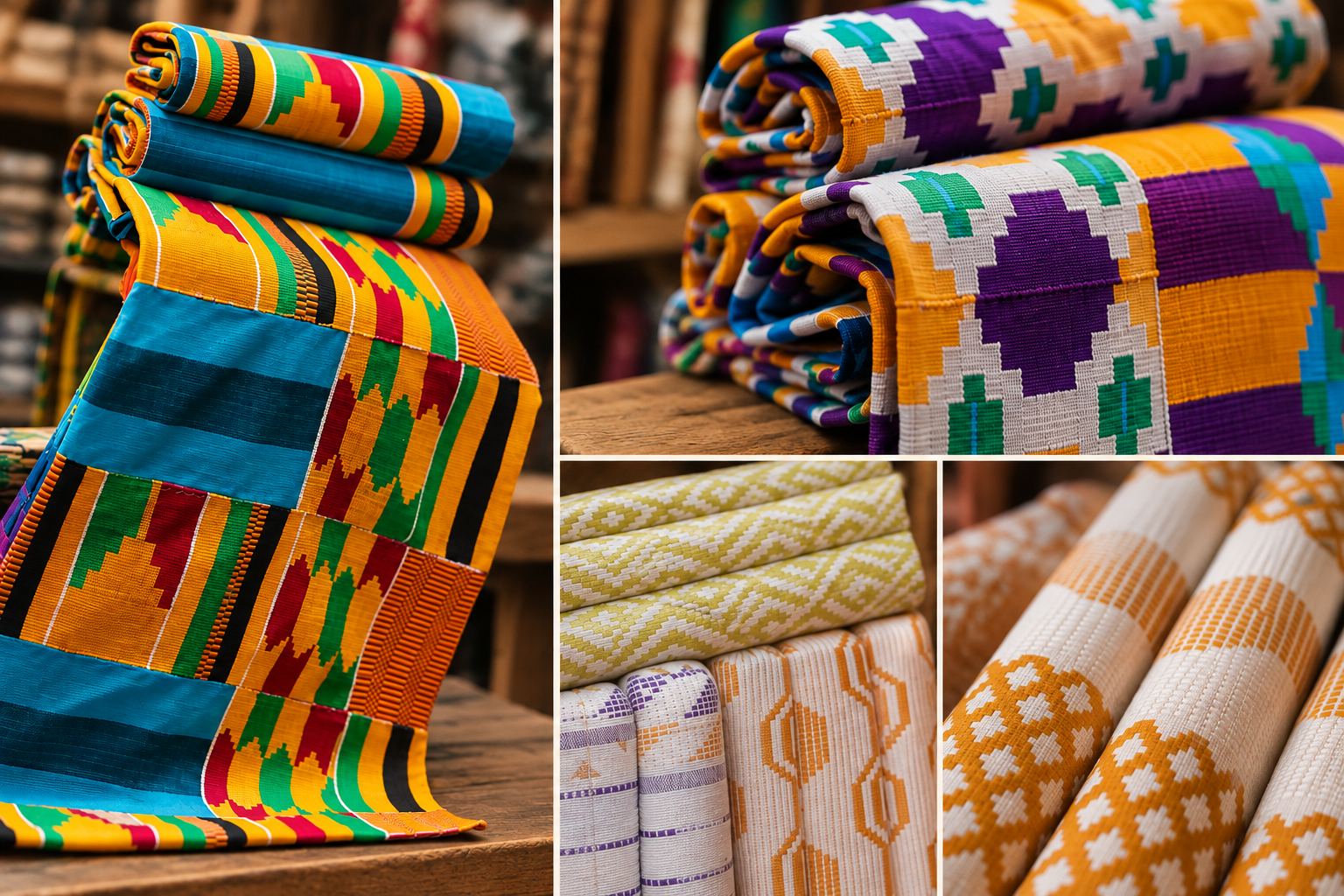
Kente: Rooted in Ghanaian weaving traditions, its meaning and significance continue to extend across generations and communities.
I find that fascinating. Something can take on new meaning without necessarily losing its connection to where it began. Yet, I wonder whether there is a difference between allowing a tradition to grow and gradually removing the very practices that define it.
Perhaps that is the more difficult conversation about tradition and modernity. Not simply how we make room for both, but how we recognize what is essential to a tradition before deciding what can change.
The Familiar, Seen Differently
There are also traditions whose significance we come to appreciate differently with time.
For me, shea butter is one of them.
Growing up in Ghana, shea butter wasn't presented as a luxury or something particularly special. It was familiar, practical, and available. We used it because it was what we knew.
Years later, I find myself looking at that same ingredient differently. What once seemed ordinary now carries a deeper appreciation for the knowledge, labor, and generations of practice behind it.
There is something about growing older, and perhaps living away from home, that changes how we understand the things we once knew.
My relationship with shea butter has certainly changed. Through MAAGO, I have had the opportunity to learn more about its origins, the women whose work sustains its production, and the place it continues to hold in everyday care.
And I recognize that MAAGO itself is part of this conversation. We are presenting a familiar Ghanaian ingredient in ways that reflect contemporary preferences and lifestyles. That comes with a responsibility to remain connected to the knowledge, people, and traditions behind it.
I don't believe everything from the past needs to be brought back or practiced exactly as it once was. But I do believe there is value in understanding what we grew up knowing before deciding how it belongs in our lives today.
A Thought to Carry Forward
As we continue October's theme, The Ritual of Keeping, I am reminded that tradition is not always as straightforward as preserving what came before us.
My mother's hospitality, the changing customs surrounding marriage, the wider meaning Kente has come to hold, and even my own relationship with shea butter all offer different ways of looking at what we inherit.
Some traditions remain familiar. Others change with our circumstances, and some find new meaning in places far from where they began.
But I keep returning to one question: When we change how a tradition is practiced, how do we know whether we are helping it endure or slowly losing what made it meaningful in the first place?
I don't know that there is one answer. Perhaps it depends on the tradition, the people who carry it, and what they understand its purpose to be.
What tradition from your upbringing has changed over time, and do you feel its meaning has changed with it?
I'd love to hear your thoughts.
With gratitude,
Alice